
Introduction
In regions prone to storms and lightning, investing in whole house surge protection coastal Southeast Texas is a smart move for homeowners. When you live in homes in the Beaumont or Lumberton area, the risk of power surges caused by lightning strikes or utility switching events is significantly elevated. Installing a dedicated protect-system at your main panel shields your home’s wiring and appliances from destructive voltage spikes and gives peace of mind when the next storm hits. For full-service solutions, visit our homepage and when you’re ready to protect your home, reach out via our contact page.
Why Homes in the Beaumont/Lumberton Area Face Elevated Surge Risk
Coastal and near-coastal environments bring two particularly dangerous surge triggers: lightning strikes and grid restoration surges. A direct lightning strike or a nearby strike can send thousands of volts into your home’s electrical system. Residential surge protectors at outlets won’t suffice when the surge originates at the service panel.
Further, when power is restored after a storm or outage, massive voltage fluctuations often occur. In Southeast Texas, where weather systems frequently knock out power, the surge when electricity returns is a major risk factor. As one article notes, “many homeowners’ insurance policies don’t cover damage from power surges, making surge protection a smart investment.”
Therefore, for coastal Southeast Texas homes the combination of natural events and utility dynamics makes whole-house surge protection far more than a luxury—it’s nearly essential.
What Whole-House Surge Protection Means for Your Home
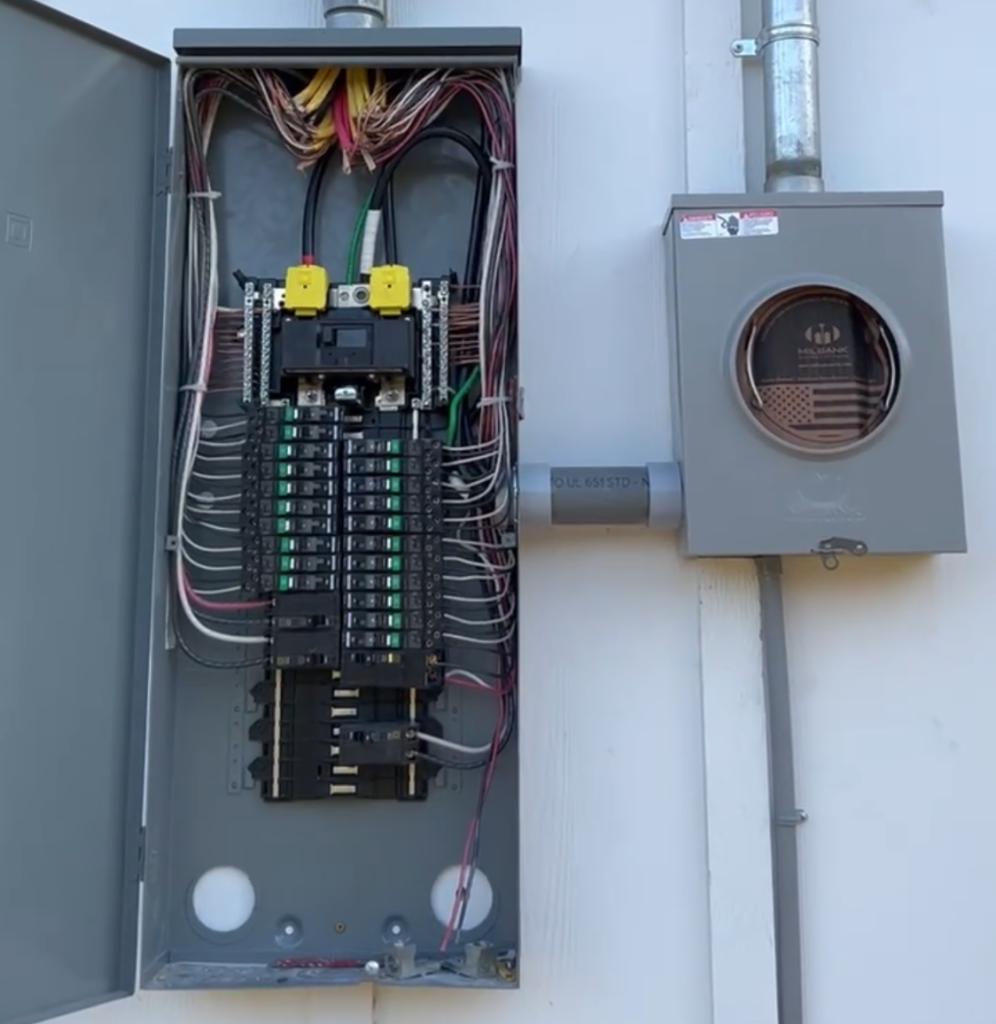
A whole-house surge protector installs at your main electrical panel (or service entrance) to intercept high voltage spikes before they spread throughout your wiring.
Key components and features include:
- A surge-protective device (SPD) rated for the service size, usually labeled for Type 1 or Type 2 protection.
- An properly sized grounding path so that the excess voltage is safely diverted to earth rather than your appliances or wiring.
- Status indicators so you and your electrician know if the protective device remains active.
- Minimal maintenance after proper installation; the system runs continuously with little intervention required.
Because your home in Beaumont or Lumberton likely houses expensive electronics, HVAC systems, home automation gear and a full electrical load, the protection benefits are substantial—especially in a storm-prone region.
Top Benefits of Installing Surge Protection for Coastal Homes
Installing whole-house surge protection yields multiple benefits:
- Comprehensive equipment protection: Beyond plug-in strips, your entire system—including wiring, outlets, appliances and electronics—is shielded.
- Reduced fire risk: Surges can result in overheating wiring, short circuits, and fire hazards. Surge arrestors help avoid those scenarios.
- Long-term cost savings: Although there’s up-front cost, avoiding equipment failure, rewiring, and appliance replacements pays off.
- Preserves home value: A home wired for storm readiness and surge protection appeals more to buyers, especially in high-risk areas like the 409 region.
- Peace of mind in a storm: You’re no longer reliant on unplugging devices or risking damage every time the grid goes down or repairs happen.
For homeowners in the Beaumont/Lumberton region, where storms and utility disruptions are more frequent, these advantages have real local significance.
How the Installation Process Works in Southeast Texas
Here’s what you should expect when installing whole-house surge protection in a coastal home:
- System assessment & grounding check
A licensed electrician visits your home, inspects your panel, grounding rods, bonding conductors and service rating. If your grounding is insufficient, the surge device won’t function optimally. - Selection of SPD device
Based on service size (200 A, 400 A etc.), service type (single-phase or three-phase if applicable), environment and load, the correct SPD is specified. The coastal environment demands corrosion-resistant enclosures and hardware. - Installation at the main panel
The SPD is mounted adjacent to your breaker panel, connected to line and ground conductors. Installation ensures that all incoming voltage surges must pass through the SPD before reaching your circuits. - Verification and testing
After installation, the electrician tests the unit, verifies indicator lights or alerts, and ensures panel labeling is updated. Clear documentation ensures your home is fully protected. - Ongoing monitoring & maintenance
While SPDs require little regular maintenance, periodic inspections (especially after major storms or outages) validate functionality and grounding integrity. One source notes the devices may degrade after repeated surges, so an inspection ensures continued protection.
During the planning phase, expect to consider surge protector installation cost Beaumont TX as well as the unique coastal wiring requirements in Lumberton TX or surrounding Southeast Texas towns.
Considerations and Cost Factors for Coastal Homes
When estimating for a coastal Southeast Texas home, keep these cost factors in mind:
- The type and size of the service panel (e.g., 200 amp vs 400 amp).
- Distance from service point to panel (longer runs may add labor and conduit).
- Quality of grounding and bonding system—if existing grounding is poor, that adds to the cost.
- Addition of secondary sub-panels or complex wiring may require multiple surge devices. Some homes may need more than one SPD for full protection.
- Environmental and code-compliance upgrades for coastal conditions (corrosion-resistant materials, moisture-proof panel covers).
While the up-front install may cost a few hundred to over a thousand dollars depending on complexity, the long-term savings and value justification in storm-prone Southeast Texas often outweigh the cost.
Why DIY Isn’t the Right Choice Here
While plug-in surge strips are common, they do not provide the system-level protection homeowners in coastal areas need. Whole-house devices require professional installation because they connect inside the main panel and rely on proper grounding to be effective. Plug-in devices only protect a few outlets, not your wiring or panel itself.
Beyond safety, improper installation may leave your home vulnerable, void warranties, or fail insurance verification. In coastal jurisdictions, code compliance is critical. Hiring a qualified professional ensures your installation meets both performance and regulatory standards.
Common Mistakes to Avoid
- Installing an SPD without verifying grounding system adequacy—or assuming your home’s old grounding is sufficient.
- Plugging in only outlet-based surge strips and assuming that is enough.
- Overlooking sub-panels or detached buildings that may require additional protection.
- Failing to update panel labeling and documentation for inspections or insurance.
- Skipping surge protection after a major storm or utility outage when risk remains elevated.
Addressing these mistakes proactively helps your home withstand the next big surge event.
Conclusion
Given the higher risk of storms and lightning in the Beaumont/Lumberton area, installing whole house surge protection coastal Southeast Texas is a wise and practical investment. When you partner with licensed electricians provide trusted panel upgrades, replacements, and breaker repairs in Beaumont, TX, and surrounding areas, you gain not only a safeguard for your wiring and electronics—but also peace of mind during the next power disruption. Protecting your home’s electrical system from surges isn’t optional in storm-prone Southeast Texas—it’s
