
Hurricanes vs. House Pipes
Along the Gulf Coast, “100-year” storms feel more like “every-other-year” storms. Between Harvey, Imelda, and Laura, Southeast Texas has endured more than six feet of rainfall in eight hurricane seasons—enough water to submerge a two-story house from gutter to slab. Most people imagine wind-torn roofs and toppled trees, but plumbers know the worst damage rises from below: sewer mains that back-flow, crawl-spaces that become cisterns, and water heaters that bob like corks because a rubber flapper failed.
The scary part? Almost every plumbing failure that ruins drywall and hardwood floors is preventable with a weekend of prep and a few strategic upgrades. This blog breaks down ten essential steps to hurricane-harden your plumbing:
- Map your drainage weak spots
- Add a full-port backwater valve
- Protect gas and water heaters from float-off
- Elevate laundry appliances and softeners
- Inspect and test sump pumps—then add battery backup
- Upgrade outdoor penetrations and hose bibs
- Replace brittle supply lines with water-wise PEX
- Label the main shut-off and practice a two-minute drill
- Install smart leak and temperature sensors
- Create a post-storm flush & sanitize protocol
Throughout the article you’ll find quick DIY pointers, cost ranges, and red-flag warnings that call for a licensed pro.
Own an older house? See Historic Home Plumbing Challenges for clues that your clay or cast-iron sewer may already be a ticking flood bomb.
1. Know Your Sewer-Line Elevation
Every drainage system obeys gravity—until a hurricane shoves billions of gallons back the other way. If your building drain lies lower than the city main in the street, rising water can reverse flow and push raw sewage through toilets, showers, and floor drains. A $250 video camera inspection reveals sags (“bellies”), offset joints, and root intrusions that trap debris—all of which make back-flow more likely.
DIY or Pro? Camera work is pro territory; you’ll receive a USB recording and a distance counter so you know exactly where repairs belong.
2. Install a Full-Port Backwater Valve
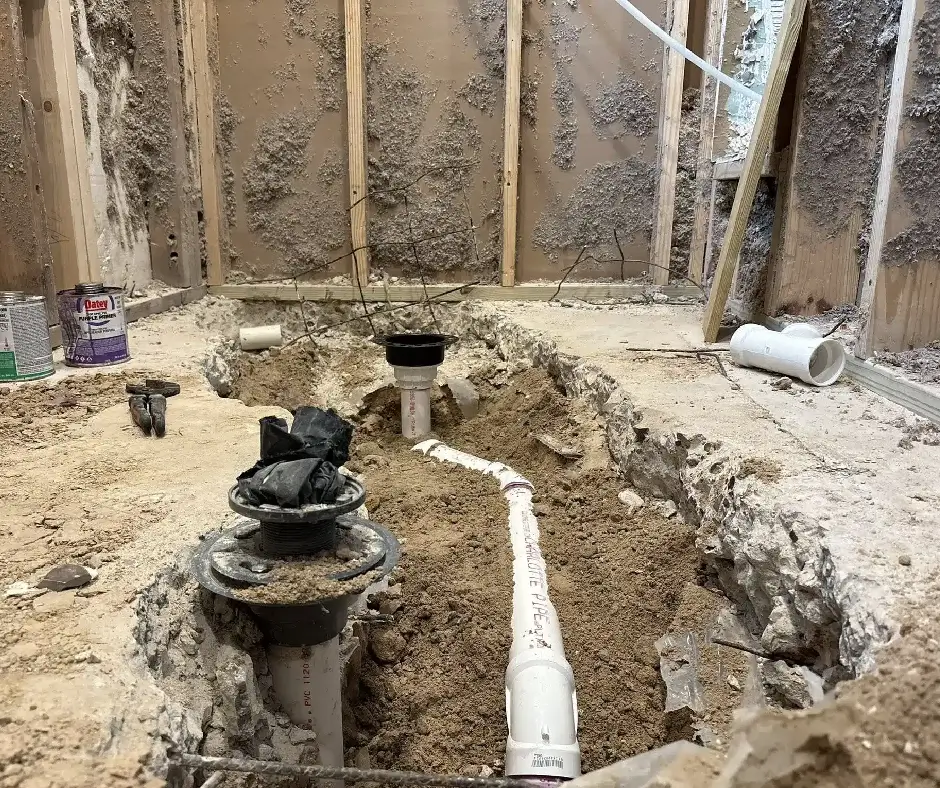
Think of a backwater valve as a levee gate inside your sewer pipe. Under normal flow its flap hangs open; if water tries to flow inbound, hydraulic pressure slams the gate shut. Models with clear covers let you verify operation at a glance. Installation involves cutting a section of SDR-35 or PVC and gluing the valve between mission clamps—usually right outside the slab. Budget $600–$950 installed; cheaper than ripping up oak flooring.
Maintenance Tip: Snap the lid and wipe grit off the flap every six months so it doesn’t jam open.
3. Strap Gas & Water Heaters Against Buoyancy
A fifty-gallon tank weighs almost nothing when surrounding water lifts it; gas flex lines shear in seconds. Two perforated steel earthquake straps screwed into wall studs keep the tank grounded. While you’re back there, install a raised pan with a PVC discharge to daylight—double insurance if the valve weeps during pressure swings.
4. Elevate Vulnerable Appliances
During Hurricane Harvey, garages in Beaumont averaged eight inches of standing water. Any appliance outlet lower than that became toast. Build an 8-inch platform with pressure-treated 2 × 6 blocks and plywood for washers, dryers, and water softeners. Paint the riser with porch enamel so it survives minor splashes.
5. Test Sump Pumps—and Add a Battery Backup
If your home features a basement, sunken den, or elevator pit, the sump pump is the last line of defense. Once a month, dump a five-gallon bucket into the pit. The float should rise, the motor should fire instantly, and the pit should empty within 30 seconds. Hearing gurgles or smelling burning windings? Replace the pump now, not at 2 a.m. Mid-storm power failures demand redundancy: a 12-volt backup pump with AGM battery can eject 10,000 gallons on one charge. Cost: ~$900 in parts, priceless in peace of mind.
Want greener water systems year-round? Browse Eco-Friendly Plumbing Upgrades for Your Home for low-flow fixtures and on-demand heaters that also stand up better to flood chaos.
6. Seal Foundation Penetrations
Hose bibs, gas stubs, and electrical conduits leave pencil-wide gaps in brick or siding—perfect entry points for floodwater. Scrape away brittle caulk and reseal with flexible polyurethane sealant. Unlike latex, it expands and contracts without cracking under Texas sun. While you’re outside, install frost-proof, vacuum-breaker hose bibs a few inches higher than existing ones; every inch matters when water creeps up walkways.
7. Replace Old Copper or Galvanized With PEX
Rigid copper under slab can pinch, split, or corrode when shifting clay soils swell with stormwater. Cross-linked polyethylene (PEX) piping absorbs movement and offers fewer joints to leak. Its crimp-ring connections hold tight even if the pipe flexes. A whole-house repipe may sound extreme, but many homeowners piggyback it onto remodels or insurance-funded repairs after a minor leak. End result: lower lead risk, less thermal loss, and better flood resilience.
8. Label the Main Water Shut-Off
In an evacuation, seconds matter. Spray-paint the curb-stop lid fluorescent yellow and stash a $15 shut-off wrench inside the hall closet. Before driving inland, cut water at the meter, turn off the water-heater gas valve, and open a hot-water faucet to bleed pressure. Your home may not stay bone-dry, but at least lines won’t refill and add to the flood tide.
9. Deploy Smart Leak and Temperature Sensors
Battery-powered “puck” sensors slide behind toilets, beneath sinks, and beside air-handler drain pans. When water bridges the contacts, your phone buzzes—even if you’re already miles up I-10. Pair them with whole-home shut-off valves that motor-close when a leak triggers; insurance carriers sometimes discount policies 3-5 % for this tech.
Pro insight & cost tables appear in Home-Improvement Insights From Industry Professionals—see the section on smart-home ROI for Southeast Texas zip codes.
10. Post-Storm Flush & Sanitize Protocol
Once local officials give the all-clear and power returns, resist the urge to shower immediately. Open one exterior hose bib and flush cold lines for five minutes. Then flush hot lines by opening the farthest tub valve until water runs clear and odor-free. Mix one cup of unscented bleach into the water-heater pan, let sit 15 minutes, then drain five gallons from the tank’s spigot to purge sediment stirred up by power loss.
Frequently Asked Questions
Q: Will a check valve in each fixture drain stop back-flow?
A: Inline check valves help, but only a full-port backwater valve on the main will block toilet-sized surges.
Q: How often should I service a battery backup pump?
A: Replace the AGM battery every five years. Test monthly by unplugging the primary pump and verifying the backup kicks in.
Q: Is PEX safe for drinking water?
A: Yes—PEX meets NSF/ANSI 61 standards. Use a recognized brand and oxygen-barrier pipe for recirculation loops.
Two-Minute Evacuation Drill
- Shut main valve at curb
- Flip breaker to water heater / well pump
- Close gas cock at meter
- Drop toilet lids; tape lavatory drains
- Snap photos of shut-offs for insurance timestamp
Practice twice a year so muscle memory kicks in when NOAA sirens sound.
Don’t Let Rising Water Win
Hurricane prep usually focuses on plywood and sandbags. Yet history shows eight out of ten flood-insurance claims list “plumbing back-flow” or “sump failure” as the primary cause of interior damage. Spend a weekend (and far less cash than your deductible) tightening your home’s last water defenses, and you’ll sleep easier when the Gulf begins to boil.
Call us today at 409-207-8001 to schedule your AC replacement and stay ahead of the changes. Let’s keep your home cool, comfortable, and eco-friendly for years to come! Need plumbing storm-proof services? Visit our 409 Group homepage for fast, local scheduling.
